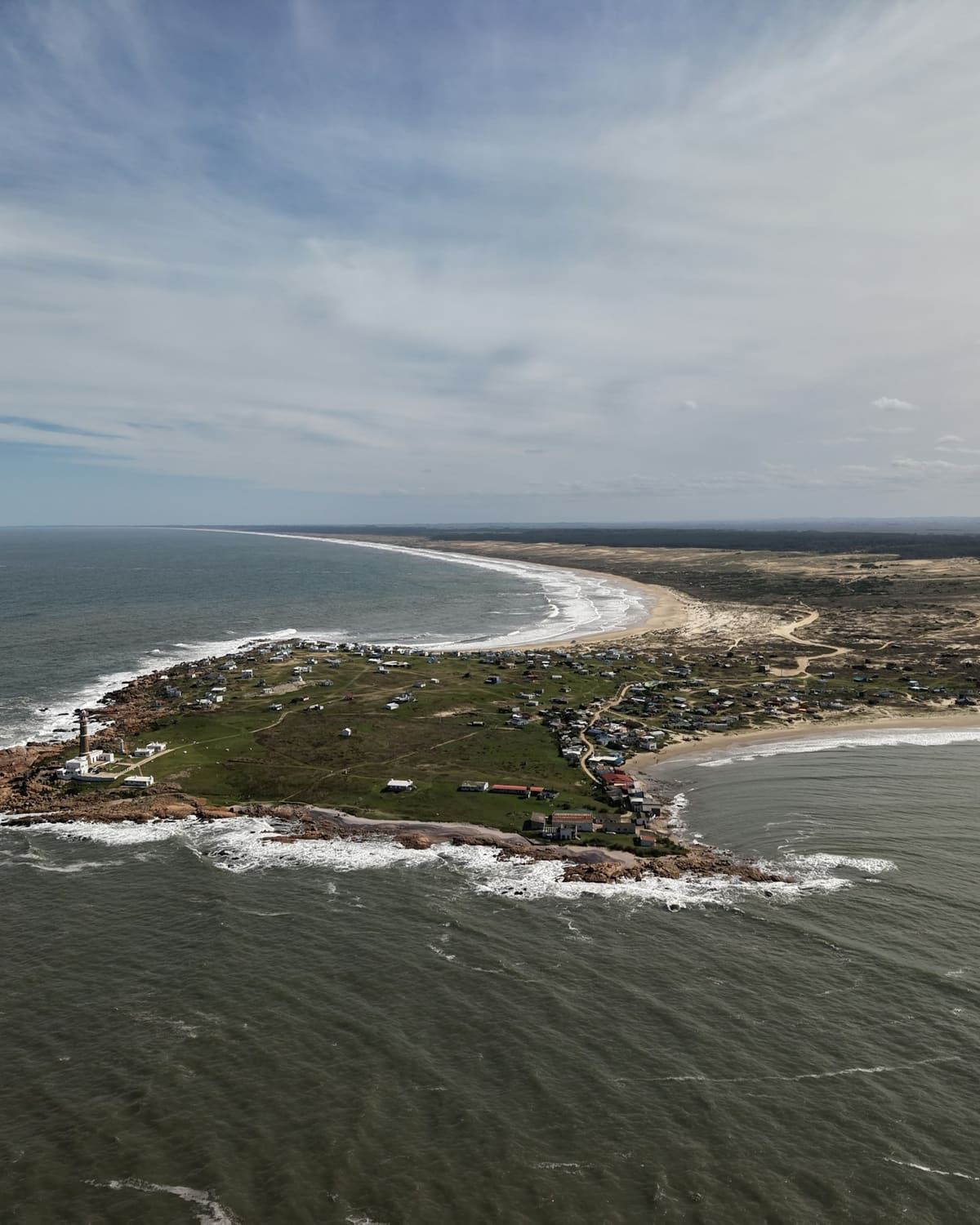
Cabo Polonio from the air: the headland with the village, the beach behind it
The region

This is where your house will stand.

We build in two departments on Uruguay's coast: Rocha and Maldonado. The map shows roughly where our houses already stand.

Department 1 of 2

Rocha

180 kilometres of Atlantic coast and plenty of room behind it.

Rocha is the quieter of the two neighbours. On an area of about 10,500 square kilometres live around 80,000 people. In La Paloma, where some of our houses stand too, just under 6,000 people live year-round. In January and February there are about 30,000. From Montevideo it is a 3 to 3.5 hour drive.

by car from Montevideo to La Paloma
3–3.5 h
of Atlantic coast
180 km
inhabitants (2023)
80,710
area
10,551 km²

Coast and beaches

The beach towns are La Paloma, La Pedrera, Barra de Valizas, Aguas Dulces and Punta del Diablo. From July to October southern right whales are off the coast, some only a few metres from the shore.
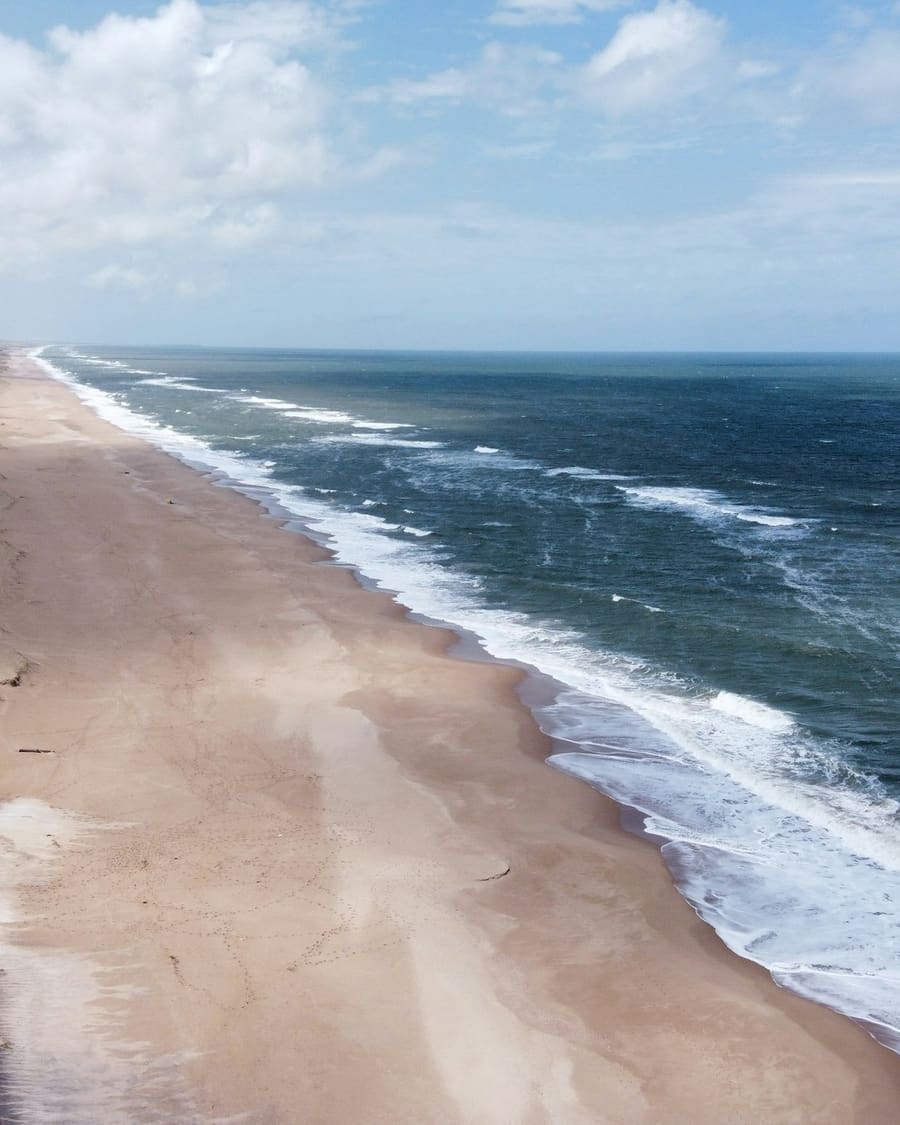
Long, empty beach near Cabo Polonio from the air, with surf
Beach near Cabo Polonio

Nature and protected areas

The Laguna de Rocha is protected over about 22,000 hectares, 7,200 of them water, only 58 centimetres deep on average. A sandbar separates it from the sea and opens from time to time. More than 220 bird species live here, among them flamingos and one of the largest populations of the black-necked swan in the world. The lagoon is part of the Bañados del Este Biosphere Reserve, recognised by UNESCO in 1976, which holds about 70,000 hectares of butiá palm groves. At Cabo Polonio, dunes more than 20 metres high shift with the wind. On the islands offshore live almost half of all the fur seals and sea lions in Uruguay.
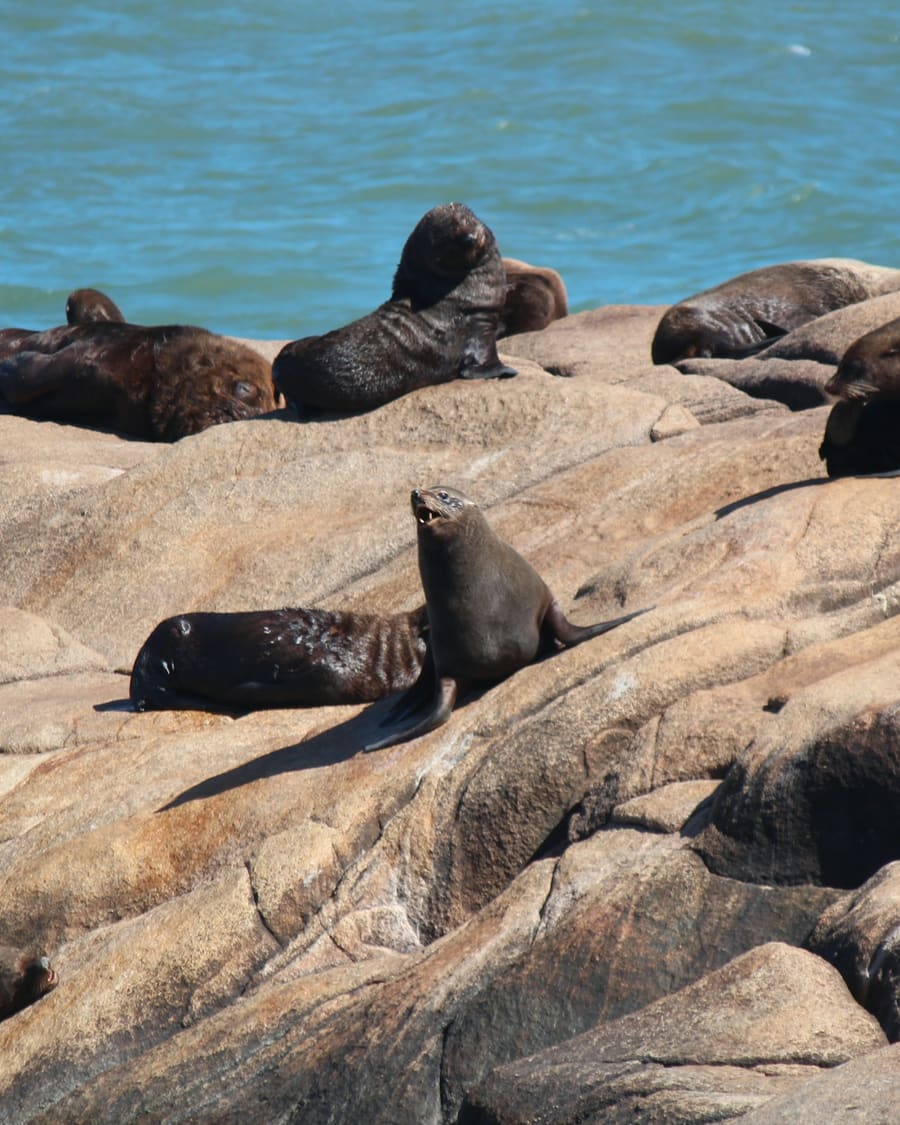
Sea lions on the rocks at Cabo Polonio
Sea lions at Cabo Polonio

Towns and villages

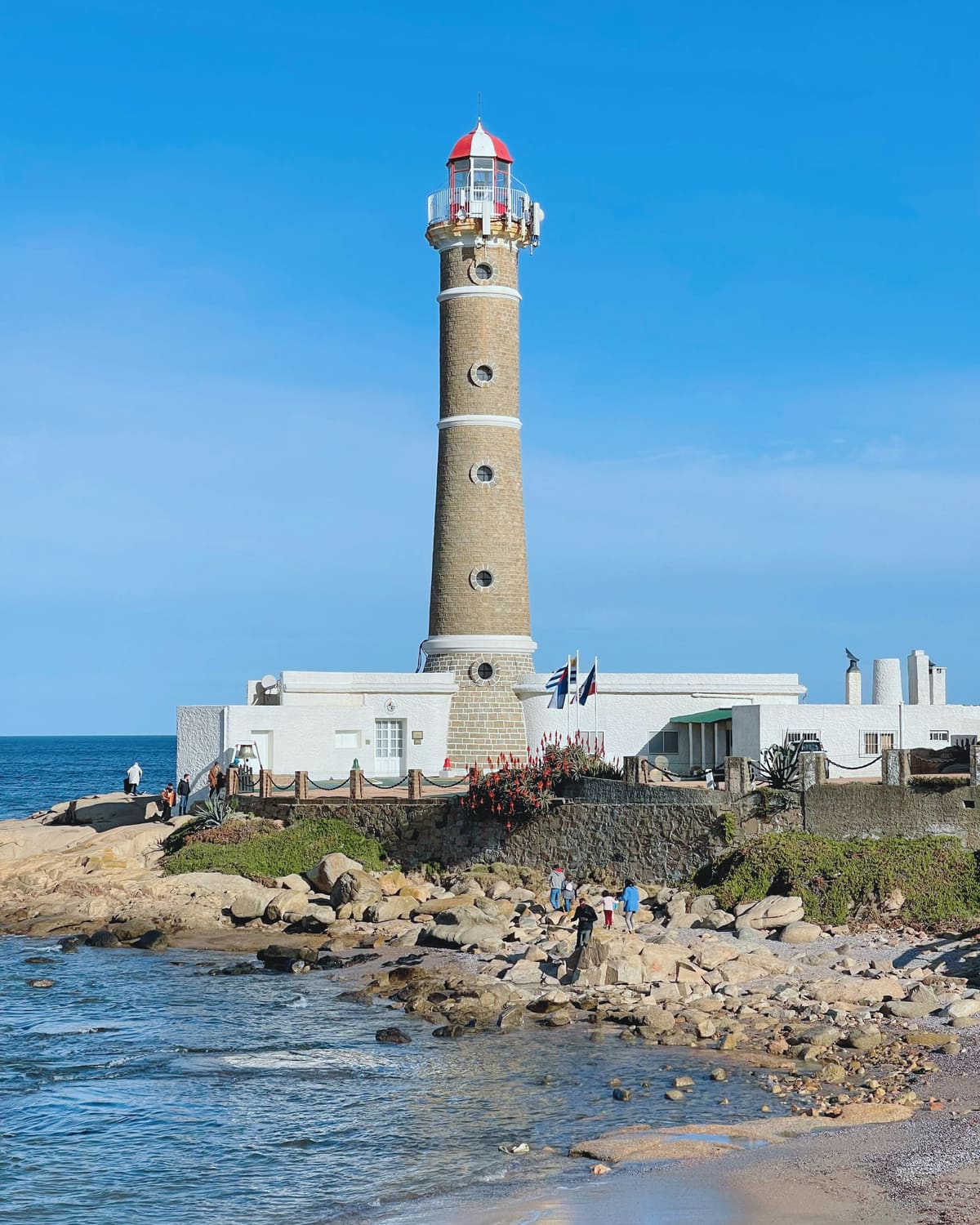
The capital is the city of Rocha, with just under 27,000 inhabitants. La Paloma was founded in 1874 and has a harbour for fishing and pleasure boats and a lighthouse at Cabo de Santa María. Your car stays at the park entrance. From there, licensed trucks cover about 7 kilometres through the dunes, or you walk.
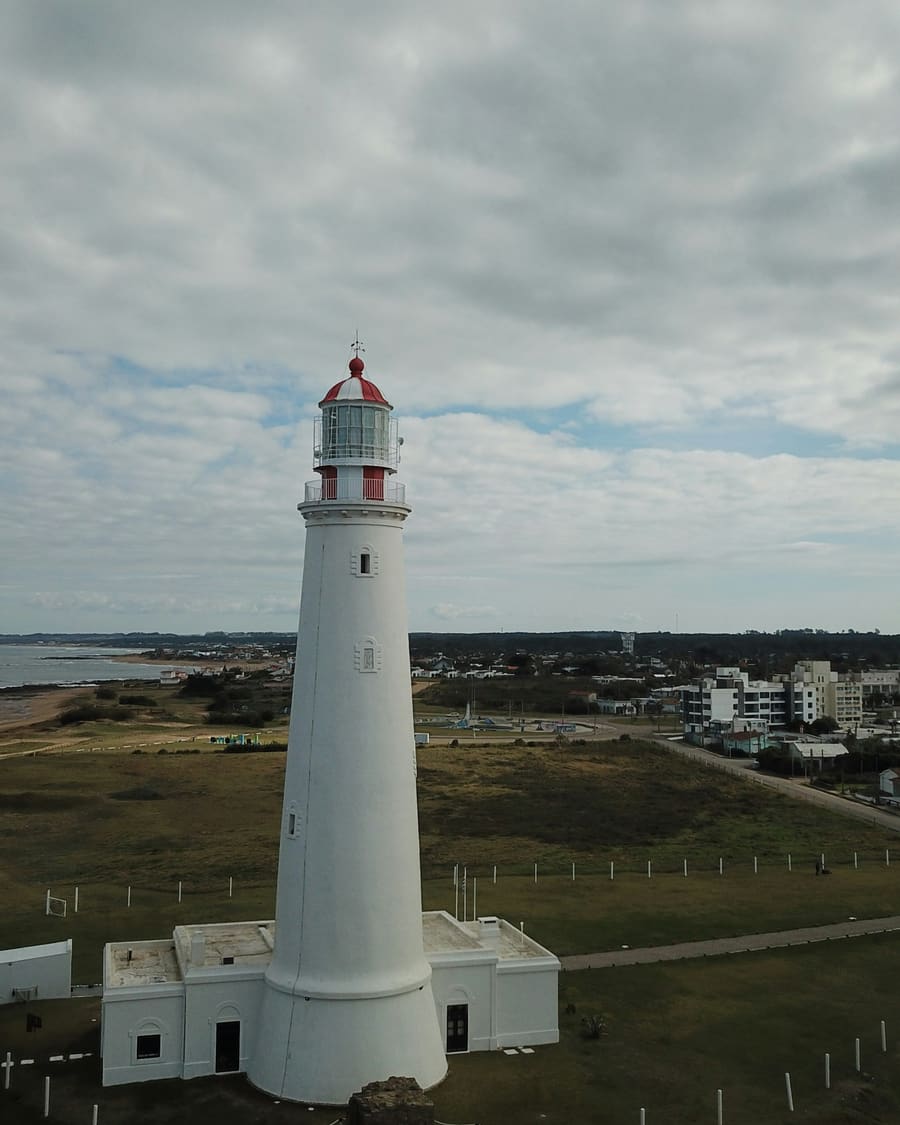
The white lighthouse at Cabo de Santa María in La Paloma, the town behind it
Lighthouse at Cabo de Santa María, La Paloma

Hills and inland

Behind the coast, people live from cattle, sheep and rice. Across the whole department there are fewer than eight inhabitants per square kilometre. Two fortresses still stand: Santa Teresa and San Miguel.
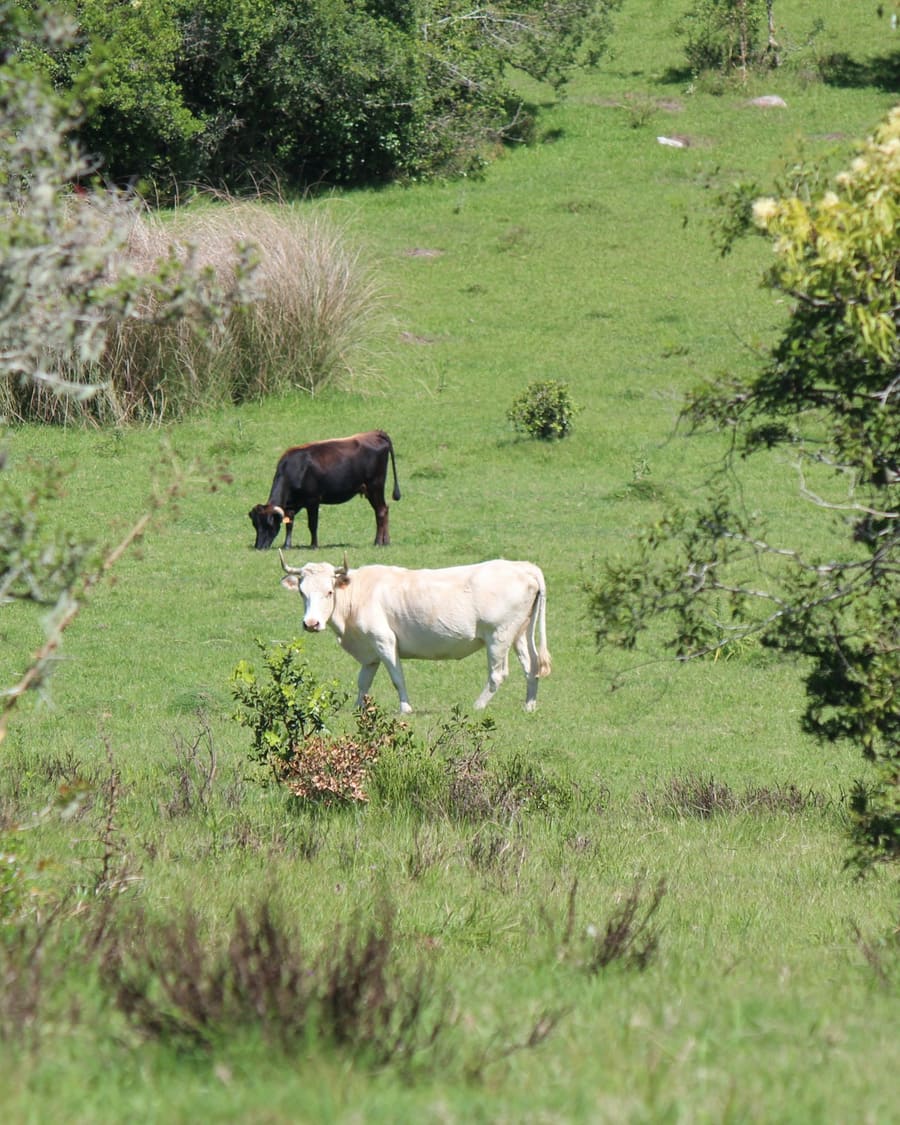
Two cows on a green pasture between shrubs
Cattle pasture inland

Getting there

From the centre of Montevideo it is a good 3 hours to the city of Rocha, 3 to 3.5 to La Paloma and 4 to 4.5 to Punta del Diablo. From Carrasco airport it is about 25 minutes less each time.

Living here all year

La Paloma has an emergency room that is open around the clock. There are hospitals in the city of Rocha, with an intensive care unit, and in Chuy. In January, in midsummer, the average is around 23 °C, in July 11 °C. The village has changed, its population has doubled, and it has stayed quiet. La Paloma has few schools and few shops and amenities. The bilingual schools are in the city of Rocha. Punta del Este is about 1 hour away. Rocha has sanatoriums that have agreements with the Sociedad Médica. Maldonado is better equipped, but more expensive.

The José Ignacio lighthouse above the rocks at the water's edge
Department 2 of 2

Maldonado

Around 100 kilometres of coast, 213,000 inhabitants and an airport of its own.

Maldonado is a little under half the size of Rocha and has about 213,000 inhabitants. At the tip of Punta del Este the Río de la Plata meets the Atlantic. With the Cerro Catedral, the highest point in Uruguay is here: 513 metres. From Montevideo to Punta del Este it is a 2 to 2.5 hour drive.

by car from Montevideo to Punta del Este
2–2.5 h
of coast
approx. 100 km
inhabitants (2023)
212,954
Cerro Catedral, the country's highest point
513 m

Coast and beaches

The coast of Maldonado is about 100 kilometres long, from the Arroyo Solís Grande to the Laguna Garzón. The towns on the water are Piriápolis, Punta del Este, La Barra and José Ignacio. Offshore lie the islands Gorriti and Lobos. Here too southern right whales can be seen from July to October.

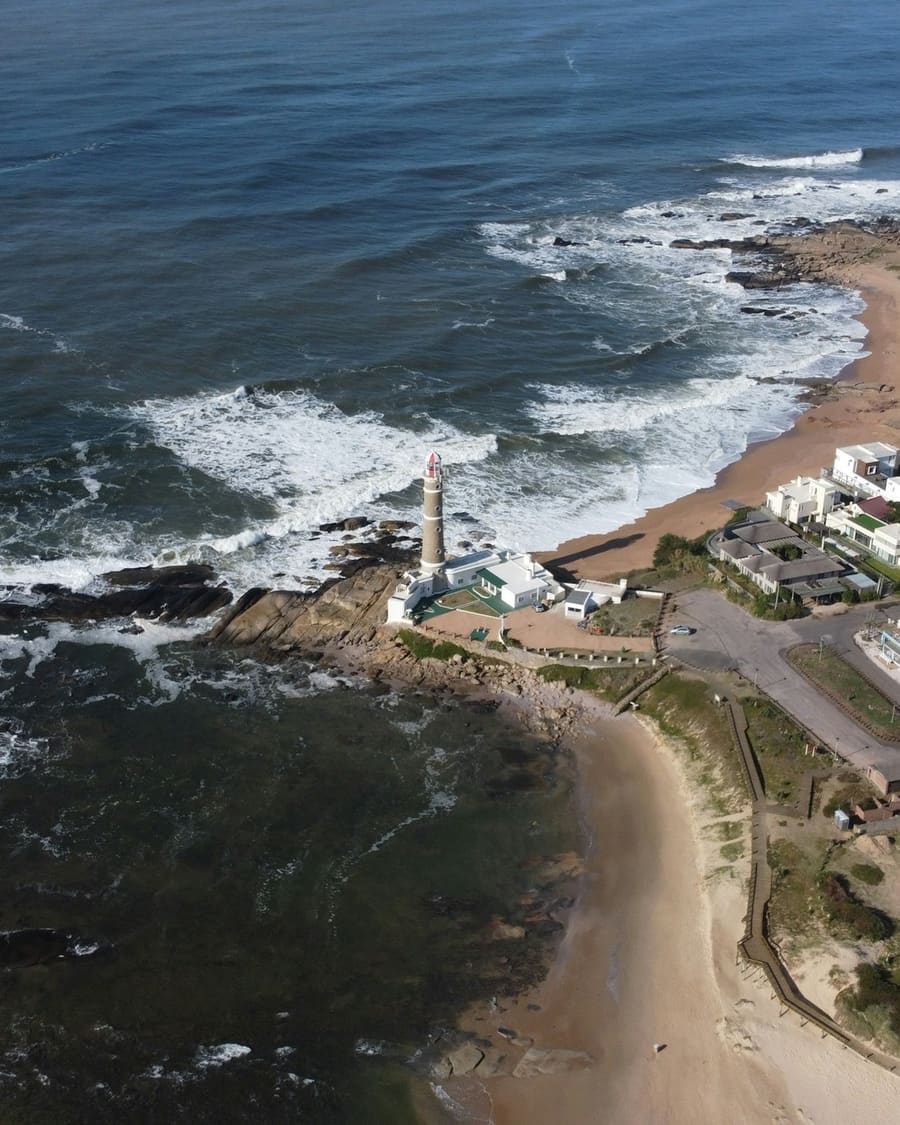
The José Ignacio peninsula from the air, surf on both sides
José Ignacio from the air

Nature and protected areas

The Isla de Lobos lies 8.1 kilometres off Punta del Este. Since 2024 it has been a national park and the first protected area in Uruguay that lies entirely at sea. Maldonado has the lagoons Laguna del Sauce and Laguna José Ignacio, and on the border with Rocha the Laguna Garzón. Across the Laguna Garzón, a circular bridge by the architect Rafael Viñoly has stood since December 2015.

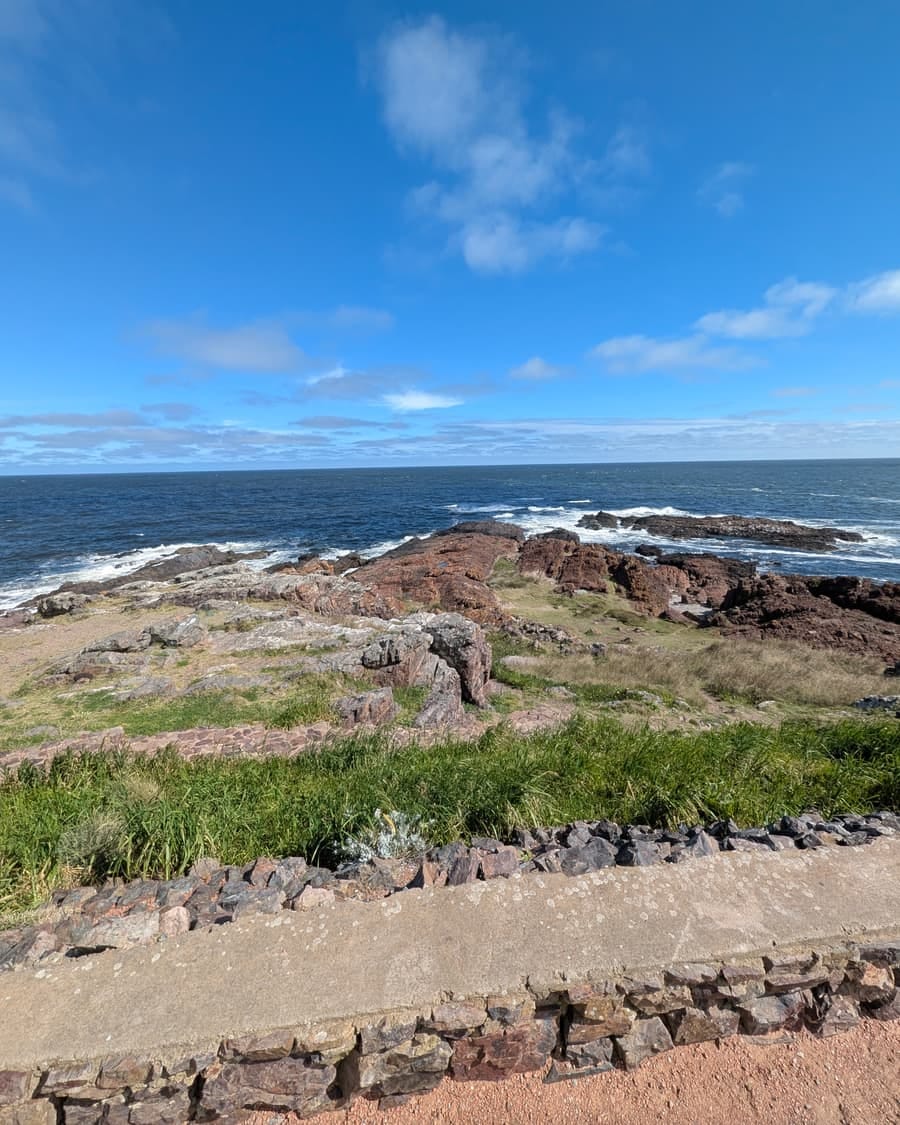
Reddish rocks and grass on the coast near Punta del Este, the sea breaking in front © Stefan Veit
Coast near Punta del Este

Towns and villages

The city of Maldonado has about 100,000 inhabitants, San Carlos 30,000, Punta del Este 18,000 and Piriápolis 12,000. Piriápolis is regarded as the country's first seaside resort.

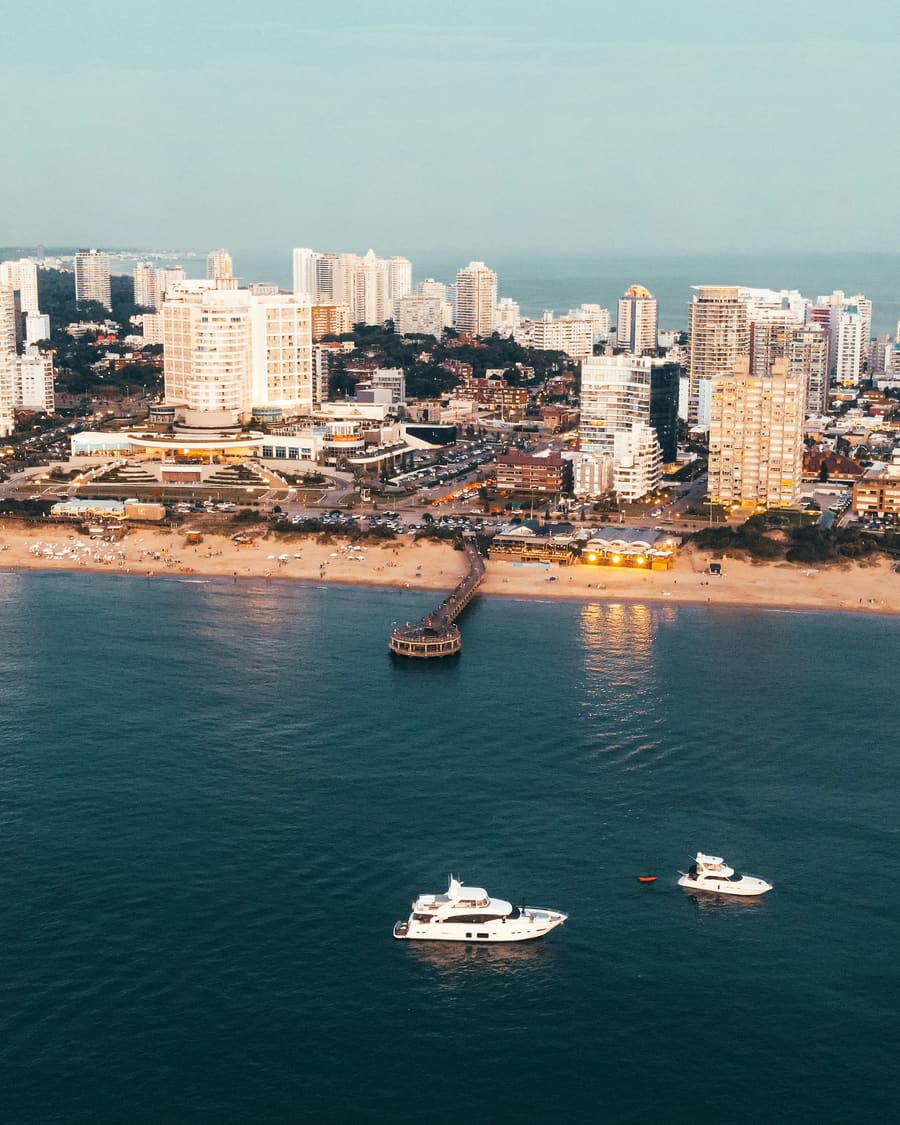
Boats in the bay off Punta del Este, the high-rises behind
The bay at Punta del Este

Hills and inland

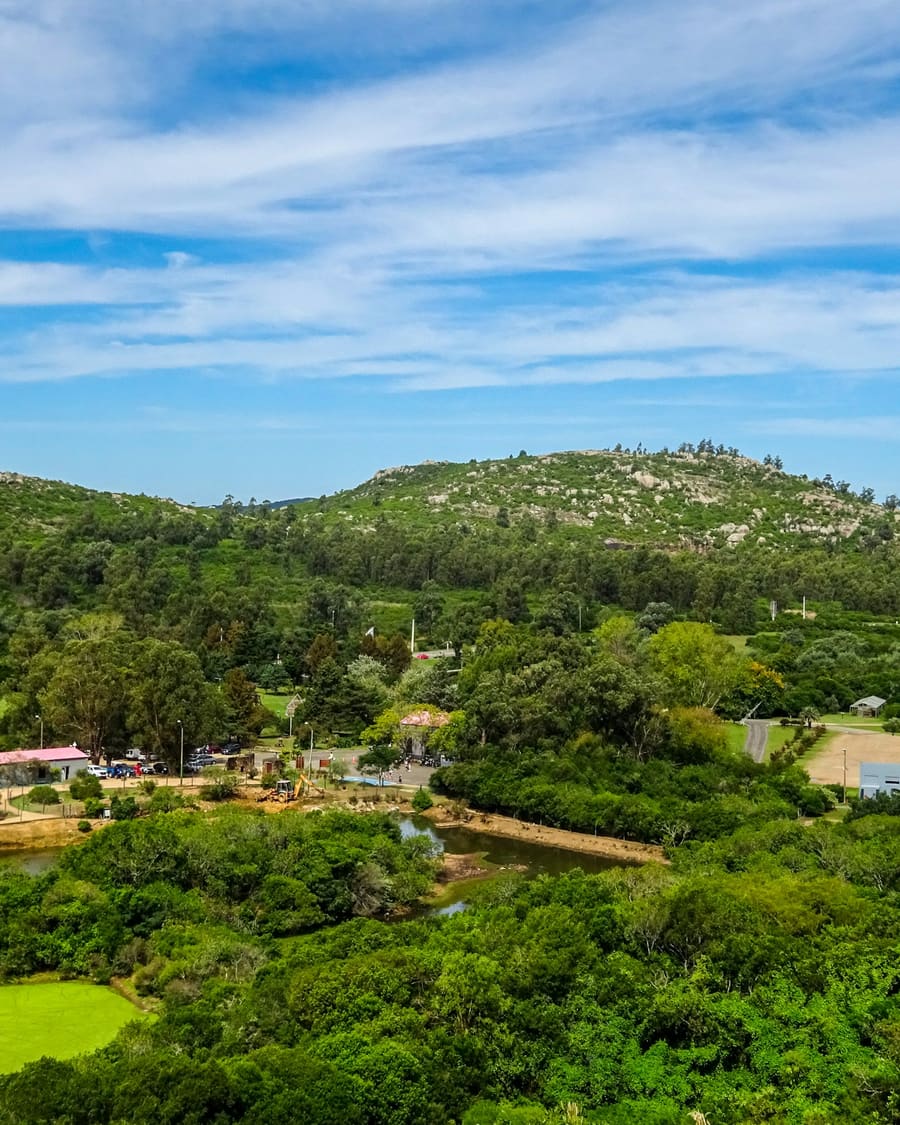
The Cerro Catedral in the Sierra Carapé is, at 513 metres, the highest point in Uruguay. Two more peaks are the Cerro de las Ánimas (501 metres) and the Cerro Pan de Azúcar (423 metres). Maldonado lives mainly from tourism, along with wine, cattle and sheep.

Green hills near Piriápolis with trees and a few houses below
Hills near Piriápolis

Getting there

From the centre of Montevideo it is just under 2 hours to Piriápolis and 2 to 2.5 hours to Punta del Este. Maldonado has an international airport of its own, Laguna del Sauce, half an hour by car from Punta del Este.

Living here all year

The city of Maldonado has the public hospital, along with the private clinics Cantegril and Mautone. There are bilingual private schools. High season runs from December to March. In January the average is around 22 °C, in July 12 °C. About 1,000 millimetres of rain fall in a year.

Map not loaded
Loading map

This is where our houses stand.

Land

Don't have land yet?

We stay with you through the search too. We come along to viewings and introduce you to the agency we work with. The agency also works in English.

Partner agency Punto Río Inmobiliaria La Paloma · Rocha · Punta del Este · Montevideo

Abroad Uruguay

Your house stands before you have paid for all of it.

You pay for each stage of the build when it starts, and the last 15 % at the key handover.

See the full process
  1. 01

    First conversation

    We get to know your land, your ideas, and your budget.

    • Free · 45 minutes
  2. 02

    Cost estimate

    You receive a written estimate of the cost.

    • Free · 5 business days
  3. 03

    Contract

    The contract sets out what gets built, how and when.

    • 10% on signing, plans and permits
  4. 04

    Construction

    We keep you updated on the build's progress.

    • Photos every Friday
    • 30% structure and roof
    • 30% installations and cladding
  5. 05

    Handover

    You receive your finished house with a written warranty.

    • 10-year warranty
    • 30% final stage, half of it at key handover
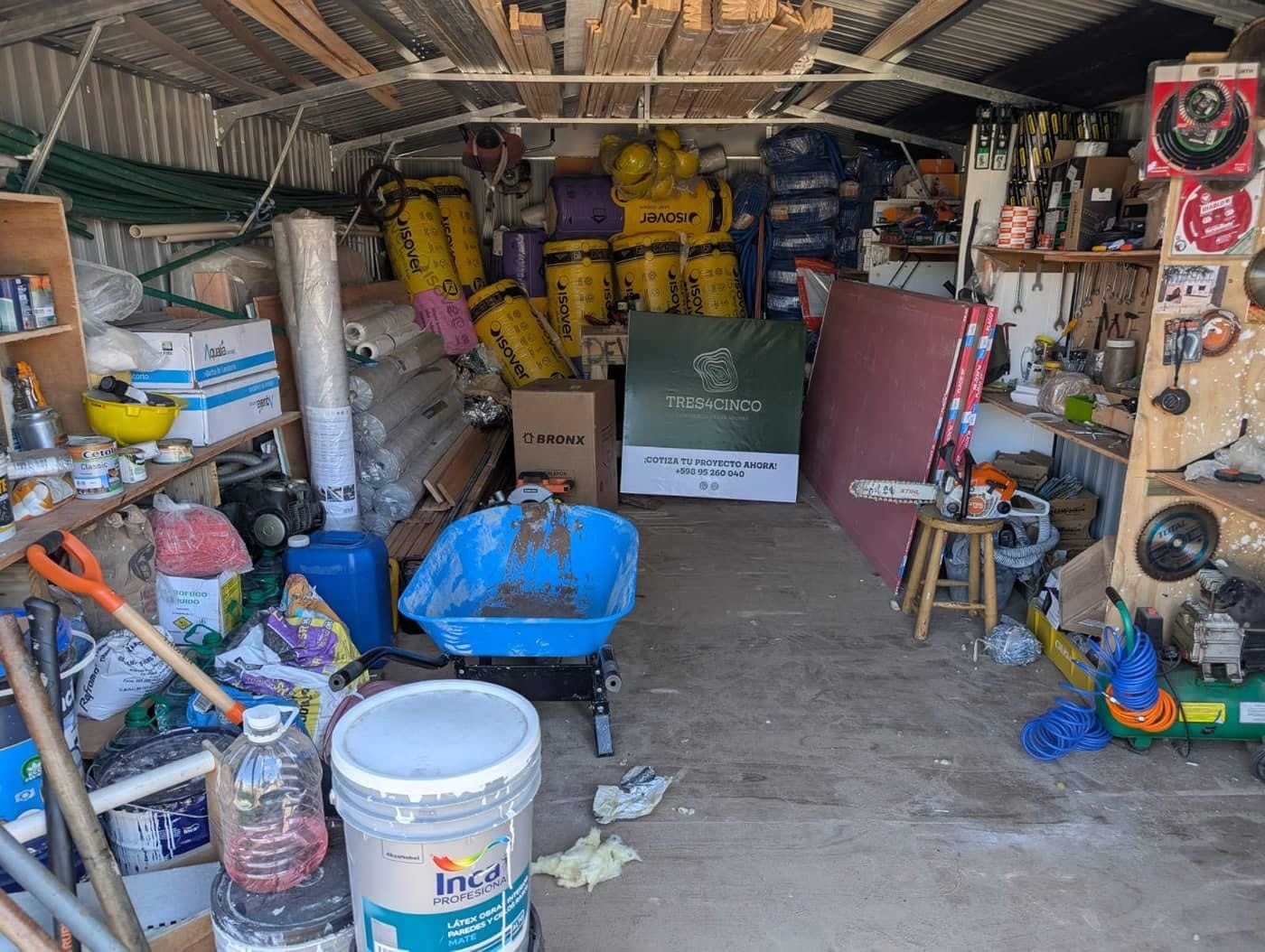
The TRES4CINCO store: Isover insulation rolls, timber, tools and the company sign.
Material for your house, stored with us
© Stefan Veit

With your payments we buy the material for your house and keep it in store until it is installed.

Payments tied to construction progress

  1. 10% Contract
  2. 30% Structure and roof
  3. 30% Installations and cladding
  4. 30% Final stage, half of it at key handover
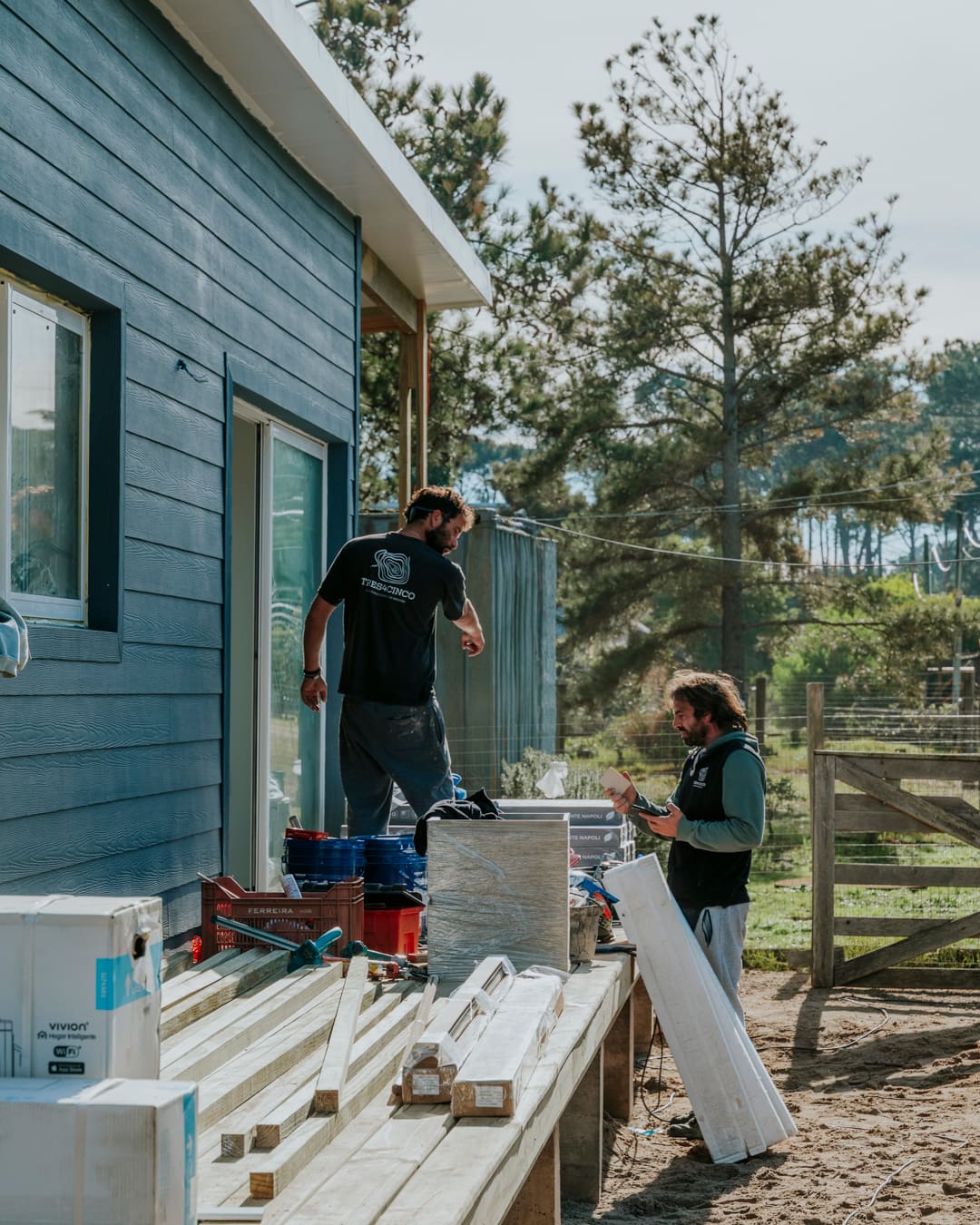
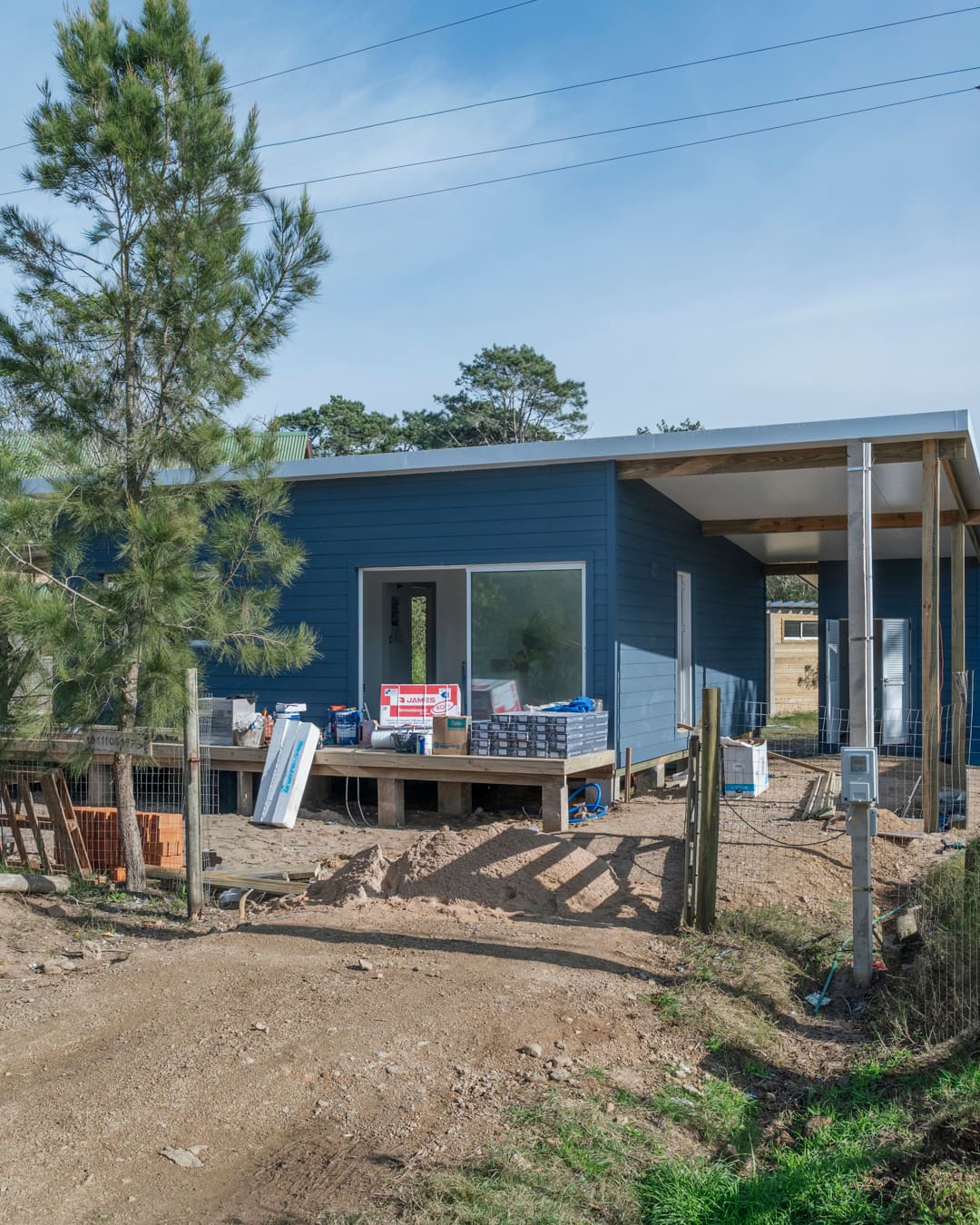
Two workers on the platform beside the blue-grey facade, with wooden battens and boxes laid out.
New photos of your house every Friday. We photograph what was built that week. You get to watch your house grow. The photos sit behind a link for our clients only. There you also see the other sites; on request your house stays private.
Building without travelling

You build in Uruguay and stay where you live.

The build needs no visit to Uruguay. A person you trust represents you there, and everything else runs by phone, chat and photos.

Who signs for you

Your trusted person signs on site.

Uruguay requires someone in the country who signs in your name and deals with the authorities. The power of attorney for this can be sent to Uruguay.

Who is on site

Morning, noon and afternoon.

visits a day by Ramiro or Carlos
3
foreman assigned to your site
1

How we stay in touch.

Anything confidential stays in your own chat.

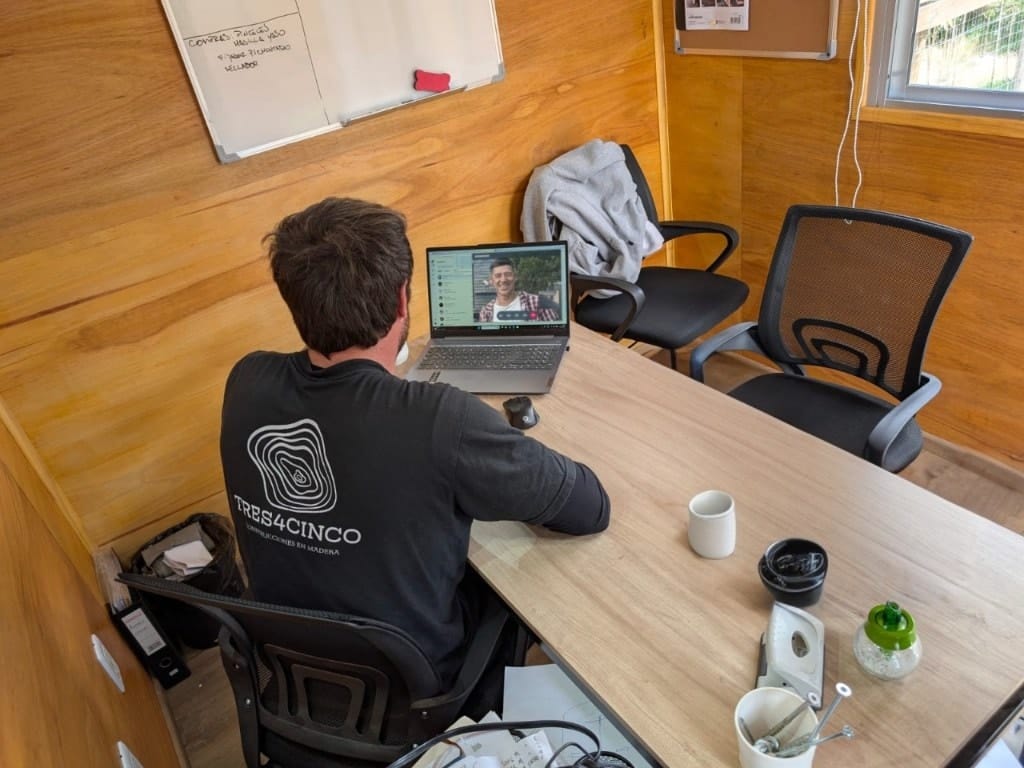
Ramiro in the site office at his laptop, on a WhatsApp video call. © Stefan Veit
WhatsApp group
You share receipts and your choice of tiles or appliances with Ramiro and your trusted person.
Phone
You speak directly with Ramiro.
Video call
You walk the site with us on camera.
Email
You get plans and contracts in writing.
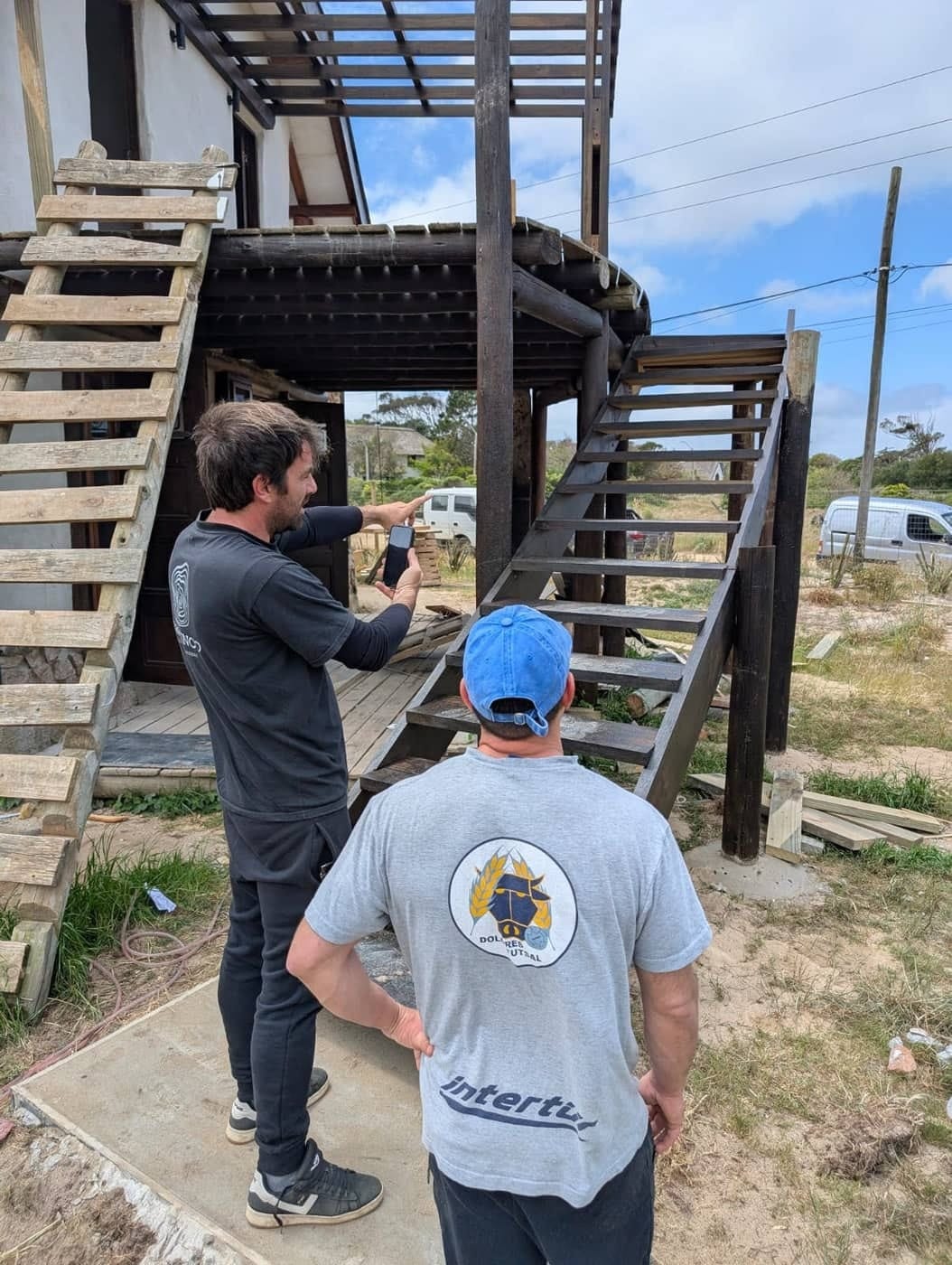
Ramiro on site, phone in hand, pointing at the new staircase. © Stefan Veit

You receive your contracts in German and in Spanish.

German speaker on the team

If you prefer German: one member of the team speaks it and looks after German-speaking clients.

Payment

How to pay from abroad.

You pay straight into one of our two accounts in Uruguay.

Our banks in Uruguay
  • BROU Banco de la República Oriental del Uruguay, the country's state bank
  • Scotiabank Scotiabank Uruguay, part of Canada's Scotiabank
Currency

Everything runs in US dollars.

Your price and every payment are in US dollars.

Good to know

Check the rate and fees first.

If you pay in another currency, your bank or payment service converts it to dollars. Ask about the rate and fees beforehand, including intermediary-bank fees.

Questions about the transfer? Write to us.

Ask about payment
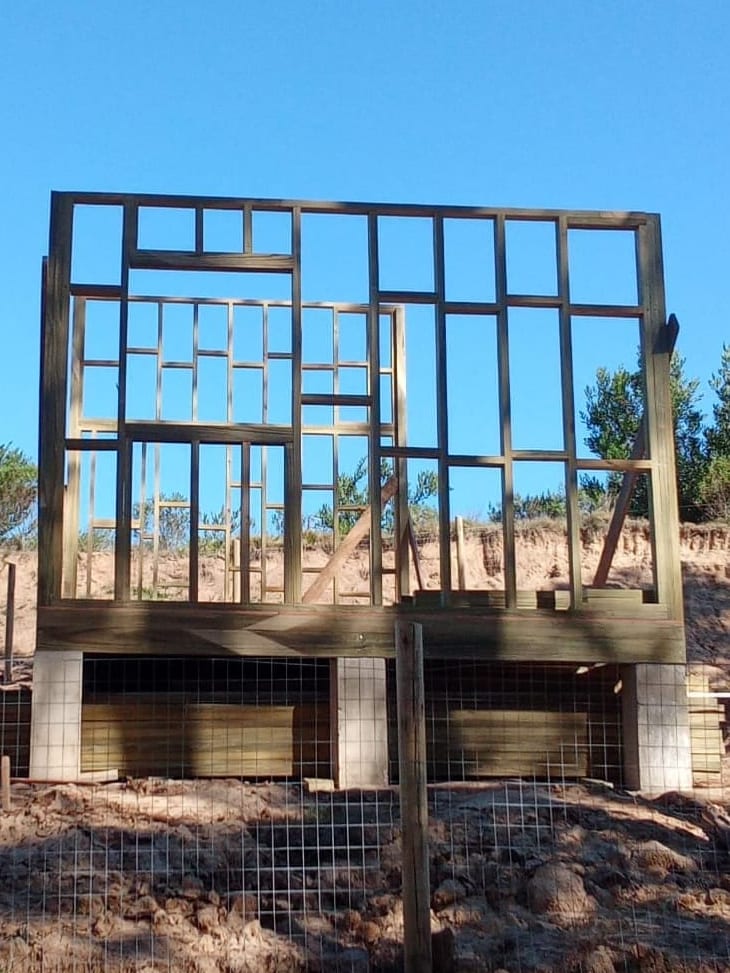
Treated pine frame on site, before the cladding goes on
Treated frame on site.
Wood protection

Our structural timber is pressure-treated with CCA. Why we use it.

We build the structural frame of your house from pine that is pressure-treated with CCA. That protects it against fungi and insects. Here is why we chose it.

In the cylinder, in three steps

Vacuum-pressure treatment

  1. 01 Vacuum

    The wood sits in the closed cylinder under vacuum.

  2. 02 Pressure

    Under pressure, the preservative is forced into the wood.

  3. 03 Fixed

    Type C CCA becomes fixed in the wood.

  1. Protected against fungi and insects.

    Pine sold in Uruguay is sapwood. Untreated, it does not hold up against fungi and insects over time. On the coast, a termite species that attacks wood has also been reported. That is why we treat the frame of your house.

  2. CCA is the proven wood preservative in Uruguay.

    CCA is the most widely used wood preservative in the country. A 2025 Uruguayan study gives two reasons: it works, and it has been in use for a long time.

  3. The preservative is fixed in the wood.

    The wood is treated under vacuum and pressure. According to the study, type C CCA becomes fixed in the wood and leaches out in water less than oil-based preservatives do. The treatment is certified by LATU, the Technological Laboratory of Uruguay.

  4. We hand over every house fully painted.

    The protective wood coating is part of the handover. It gives the wood additional protection against the weather. We give a 10-year warranty on the structure.

  5. Allowed in public structures in the EU.

    In public buildings, office buildings and industrial buildings, CCA-treated wood may be used as structural timber in the EU. It must not be used in residential buildings there, and in the United States residential use ended in 2004. Regarding existing structures, the U.S. information centre NPIC writes that the environmental agency EPA sees no unreasonable risk to the public from them. According to the agency, they do not need to be removed.

  6. How to handle this wood correctly.

    Arsenic from CCA-treated wood can reach the surface and get onto the skin when it is touched. A sealant can reduce that if it is renewed regularly. Anyone who later saws or sands the wood should wear a dust mask. CCA-treated wood must never be burned.

Want to know where the treated wood goes in your house? Ask us.

Tell us your project

Sources: REACH Regulation (EC) No 1907/2006, Annex XVII, entry 19 (arsenic compounds) · Centro Tecnológico Forestal Maderero, Latitud (Fundación LATU) and Universidad de la República: “Nuevos preservantes de madera”, final report, March 2025 · National Pesticide Information Center (Oregon State University and U.S. EPA): information page on CCA-treated wood

Extra services

Around your house.

Your house is more than the build. Some of it we do ourselves; for the rest we put you in touch with people in the area.

We do it for you

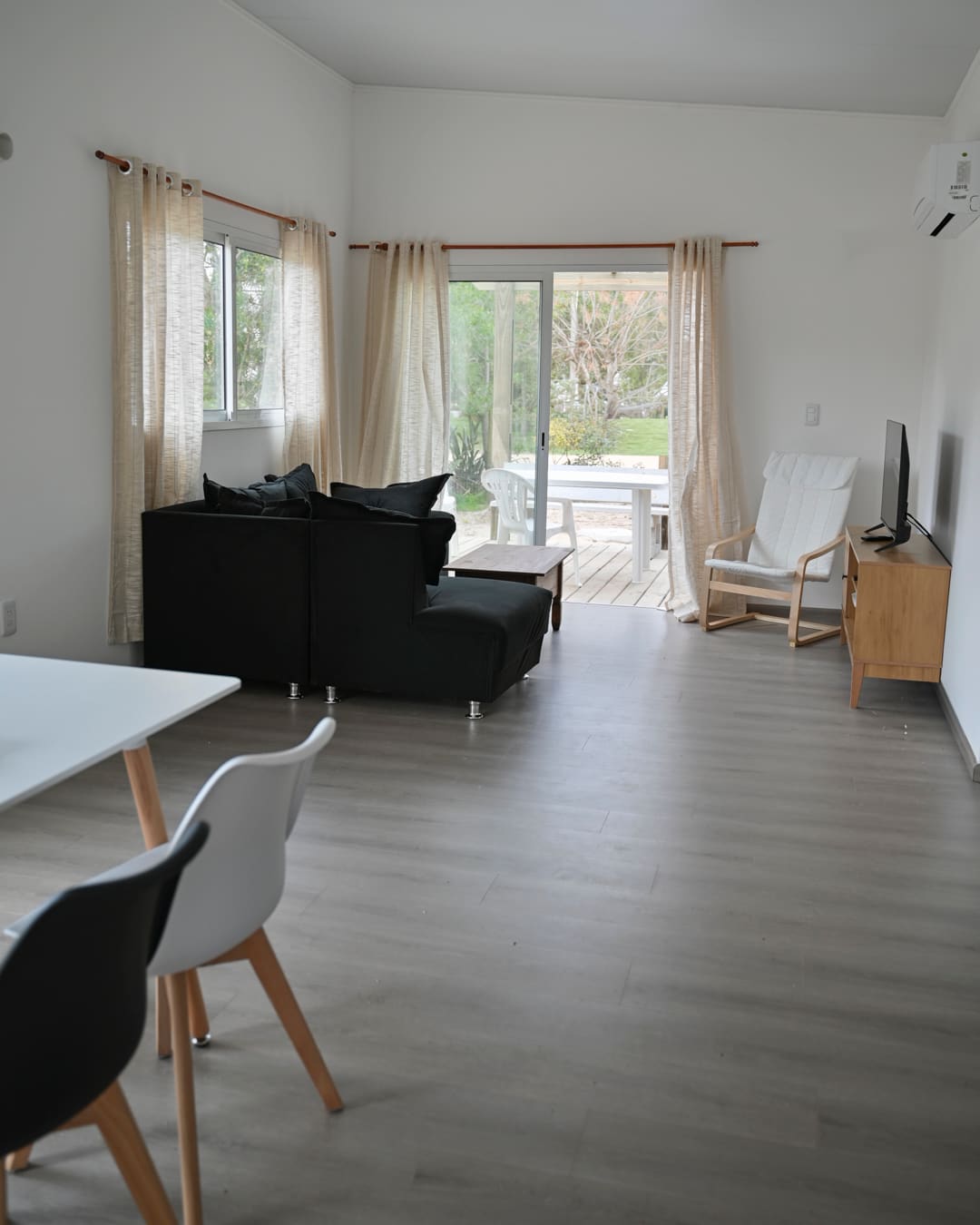
  1. Bright living room with a black sofa, curtains and a sliding glass door opening onto the wooden deck.
    01

    Furnishing your house

    We choose furniture and fittings with you, buy them, store everything until handover and set up the house ready to move in.

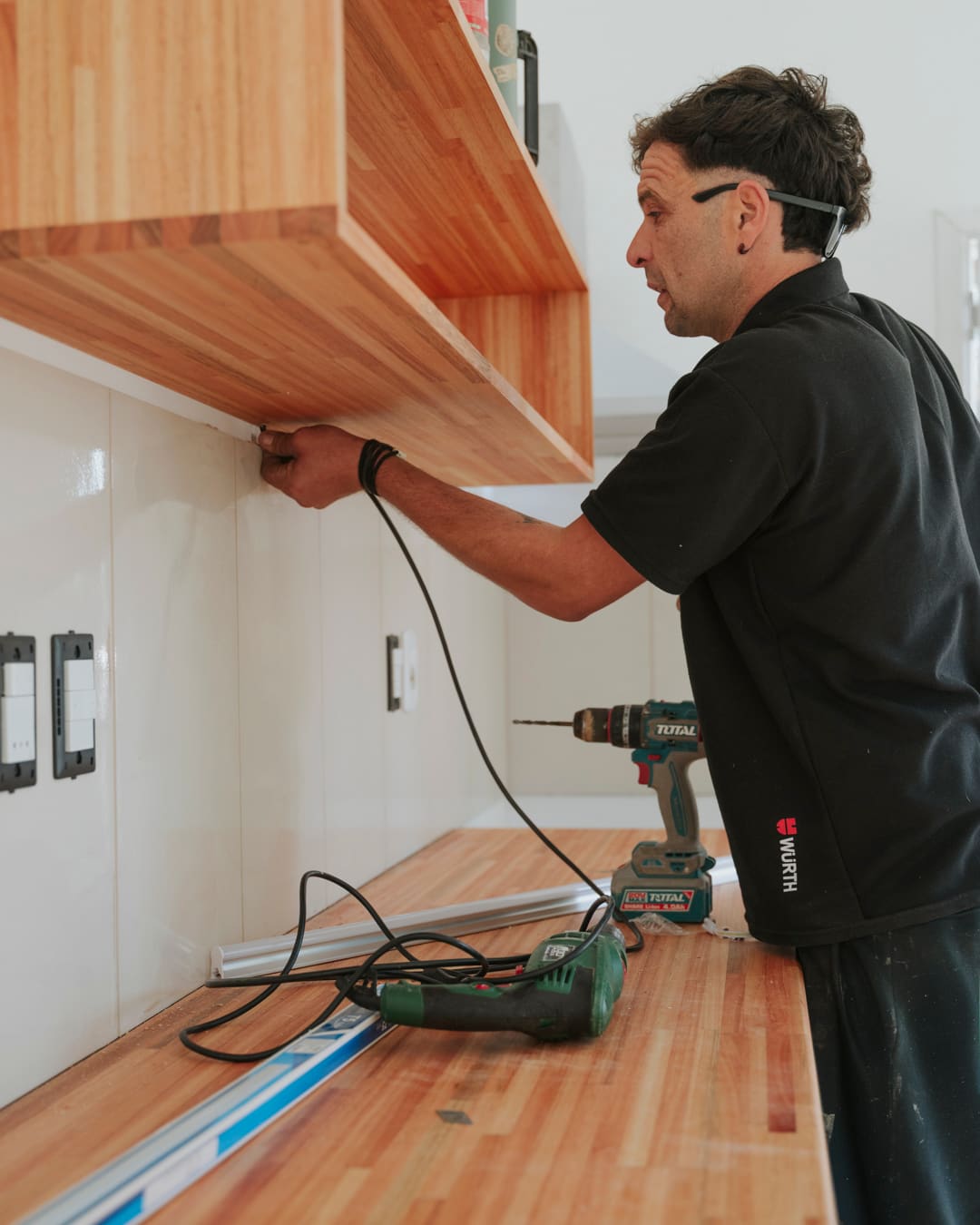
  2. A worker mounts an open wooden shelf above a wooden countertop using a cordless drill.
    02

    Fitting your own items

    You pick curtains, lamps and appliances yourself. We put them up and install them.

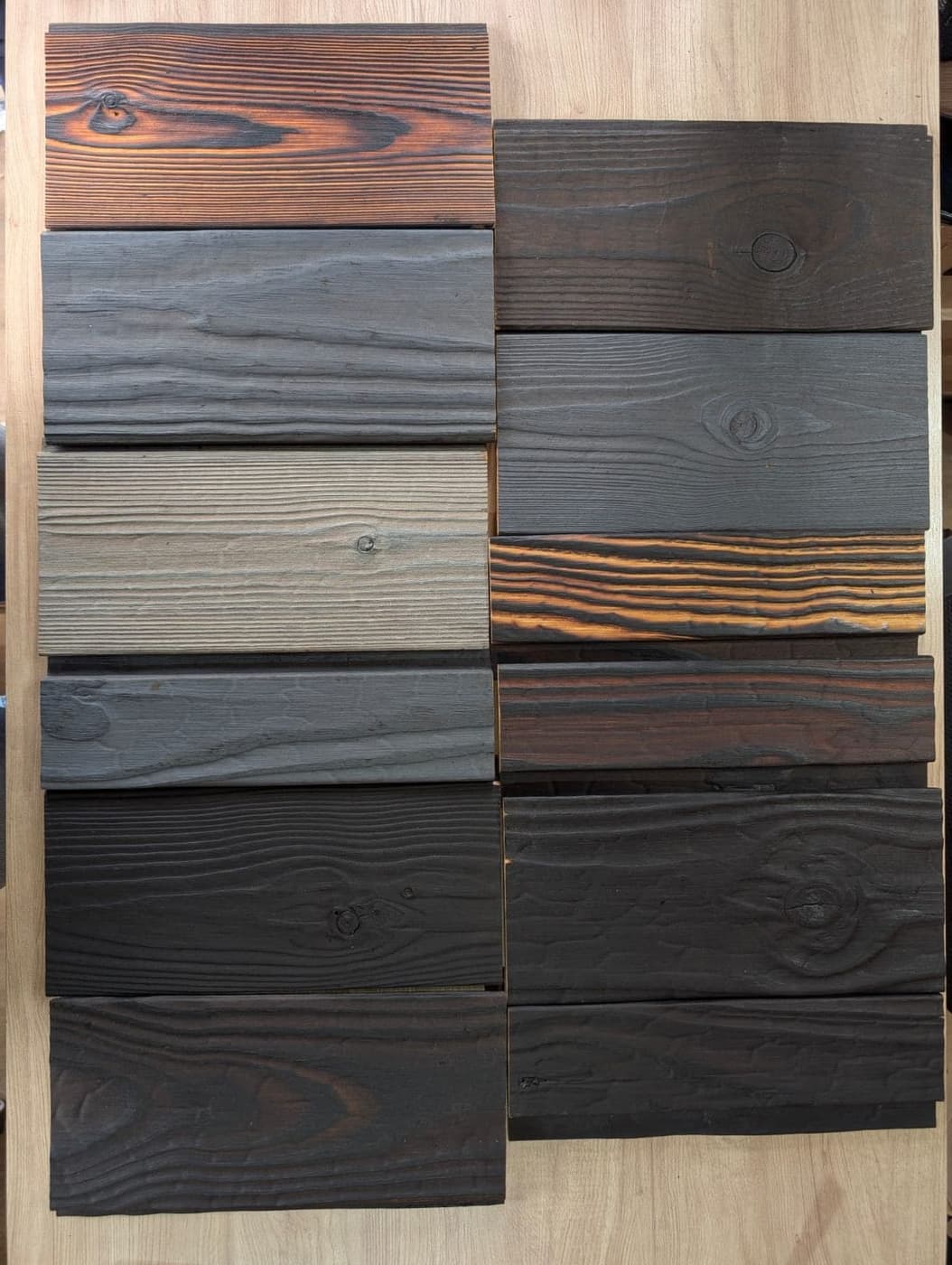
  3. Samples of charred wood in different finishes, laid out on a wooden table.
    03

    Choosing another wood

    The structure stays in pine. For the deck or gallery another wood is possible on request, as long as we approve it so the warranty still applies. It is priced separately.

We put you in touch

A selection of local providers we trust. We know many more than fit here.

Access road
A provider who builds the road to your plot.
Well
A well driller for water from your own plot.
Solar power
An installer for your own solar plant.
Sheds and halls
A provider who delivers and assembles prefabricated sheds.
Site power
An electrician authorised by UTE. Through them you apply for the temporary site meter.
Customs
An agent who clears your belongings from abroad through customs and brings them to your plot.

Looking for something not on the list? Ask us, we are glad to help.

Ask about a service

Want to know what your house would cost?

Tell us what you're planning to build in Uruguay. Your house can be planned and built from abroad.